Table of Contents
1.Introduction: The Promise of Effortless Relaxation
2.The Philosophy of Simplicity: Designing for Intuitive Control
3.The Technology of Instantaneous Comfort: How Your Spa Responds in Real-Time
4.Built for the Elements: The Science of a Reliable Spa Interface
5.Conclusion: The Future of Relaxation is at Your Fingertips
1.The Promise of Effortless Relaxation
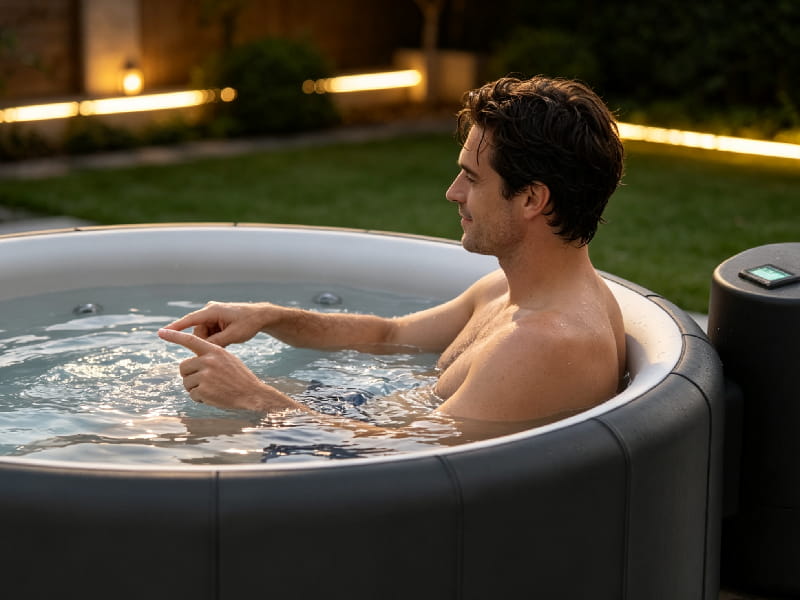
Imagine sinking into your spa, the water at the perfect temperature, the jets murmuring at just the right intensity, and the ambient lighting casting a serene glow. In this ideal scenario, your focus is entirely on relaxation and rejuvenation, not on deciphering a complex control panel or waiting for the environment to adjust. This is the promise of modern smart soft spa control: a system so intuitive and responsive that it feels like an extension of your desire for comfort.
For users who value intuitive, low-effort interactions, the technology behind a product should be practically invisible. It should simply work, responding to your needs effortlessly and instantly. But what goes into creating this seamless experience? How do integrated systems make complex adjustments feel simple? This article demystifies the world of smart spa management, exploring the design philosophies, real-time technologies, and robust engineering that place total environmental control right at your fingertips. We will delve into how these systems are designed for effortless setup, how they manage temperature changes almost instantly, and how they ensure reliable operation in the demanding spa environment.

2.The Philosophy of Simplicity: Designing for Intuitive Control
The ultimate goal of any smart wellness device is to reduce complexity, not add to it. The journey to an effortless user experience begins long before the product reaches your home; it starts with a core design philosophy centered on simplicity, integration, and user-centric principles.
Effortless from the Start: "Plug-and-Play" Mentality
The concept of "plug-and-play" is defined as a system that can be used immediately after being connected, without requiring extra configuration from the user . This philosophy is increasingly being applied to sophisticated wellness equipment. Instead of a complicated, multi-step installation process, the ideal is an experience that is as simple as possible. Modern systems achieve this through features like a built-in control box, which makes installation both easy and effortless . Documented installation guides often break the process down into just a few simple steps, from connecting sensors to downloading a companion app . This focus on a streamlined setup ensures that your journey to relaxation begins with confidence, not confusion.
The Science of Usability
Creating an interface that feels "intuitive" is not a matter of guesswork; it is a science. While the spa industry may not have its own specific set of interface standards, designers draw from established international principles of usability and human-computer interaction, such as the ISO 9241 series . These standards provide a framework for creating systems that are effective, efficient, and satisfying to use.
The effectiveness of an interface is measured by concrete metrics, including:
l Task Completion Time: How quickly can you adjust the temperature or turn on the jets?
l Accuracy: Does the system do exactly what you intended without errors?
l Perceived Ease of Use: How simple and straightforward does the user find the controls? .
By adhering to these human-centered design principles, manufacturers ensure that every tap, swipe, and command on the control interface feels natural and predictable.
Seamless Integration for Unified Control
A truly smart environment is one where all components work together in harmony. In the past, integrating various pieces of equipment could be a significant challenge for manufacturers, involving issues of technical interoperability, data silos, and complex compatibility testing . Today, the rise of universal home automation standards is revolutionizing this landscape.
Emerging wireless protocols are designed to create a cohesive ecosystem. Technologies like Zigbee, Z-Wave, and Bluetooth Low Energy (BLE) have become staples for low-power, reliable communication between devices . Looking ahead to 2026 and beyond, the industry is rapidly consolidating around standards like Matter. Matter is designed to be a universal language for smart home devices, allowing products from different brands to communicate and work together seamlessly . For the user, this means a more unified and simplified control experience, where your spa, lighting, and even sound system can be managed from a single, intuitive interface without worrying about compatibility. This move towards "invisible tech" supports your daily routines without adding clutter or complexity to your space .
3.The Technology of Instantaneous Comfort: How Your Spa Responds in Real-Time
The perception of "instant" is a critical component of a luxury experience. When you decide you want the water a degree warmer, you expect the change to happen immediately. This feeling of immediate responsiveness is not magic; it is the result of a sophisticated interplay of high-speed sensors, powerful processors, and low-latency communication protocols.
Defining "Instant": User Perception and Technical Reality
What does "instant" actually mean in the context of water heating? User studies show that expectations are high; a majority of people expect to feel a change in water temperature within 0 to 10 seconds of making an adjustment . Any longer, and the experience begins to feel sluggish. Advanced systems are engineered to meet and even exceed this expectation. Some high-end controllers boast response times—the time from detecting a change to outputting a signal—of less than 120 milliseconds , while top-tier instant water heaters can stabilize at a new temperature in just 3 to 5 seconds .
This rapid response is crucial for avoiding what performance metrics call "DHW discomfort" (Domestic Hot Water discomfort), which quantifies the negative user experience caused by temperature fluctuations and delays . A well-designed system delivers heat that is not just fast, but also precise and stable.
The Anatomy of Real-Time Control
Achieving this level of performance requires several key technological components working in concert:
1.Advanced Communication Protocols: Modern spa controllers rely on a variety of communication protocols to transmit commands and receive data in real-time. This can include wired connections like RS-485 or Modbus for industrial-grade reliability or wireless protocols for convenience. Internet and Wi-Fi-enabled systems allow for remote access and real-time monitoring from a mobile device anywhere in the world, letting you pre-heat your spa on your way home from work .
2.High-Speed Sensors and Processors: The system's ability to react instantly starts with its sensors. These devices constantly monitor water temperature and flow, feeding real-time data to the central control unit . The controller’s internal processor analyzes this data and instantly calculates the precise adjustments needed for the heating element, ensuring the target temperature is reached quickly and maintained accurately .
3.A Low-Latency Network: The speed of the entire system depends on the efficiency of its network. For home automation, low latency (the delay in data transmission) is critical. Wireless standards like those defined in IEEE 802.15.4 are optimized for the low-power, low-bandwidth, and low-latency (<100ms) needs of smart devices, ensuring that your command to raise the temperature is received and acted upon without perceptible delay .
This combination of fast communication, sensitive monitoring, and powerful processing creates an experience where the system seems to anticipate your needs, making temperature management truly effortless and instantaneous.

4.Built for the Elements: The Science of a Reliable Spa Interface
A spa controller operates in one of the most challenging environments for any electronic device: one filled with heat, constant humidity, steam, and direct splashes of water. Its ability to perform flawlessly day after day depends on rigorous engineering and adherence to strict safety and durability standards. The fingertip control interface must be not only intuitive to use but also physically resilient enough to withstand its surroundings.
Surviving Water and Steam: The Importance of IP Ratings
When you see a specification like "IP67," it is more than just a technical acronym; it is a guarantee of protection. The Ingress Protection (IP) rating is a universal standard that classifies how well a device is sealed against intrusions from foreign objects (like dust) and moisture . The rating consists of two numbers:
l The first digit indicates protection against solids (from fingers to fine dust). A rating of '6' is the highest, signifying that the enclosure is completely dust-tight .
l The second digit indicates protection against liquids. This is particularly crucial for a spa environment. A rating of IP65 means the device is protected against water jets from any direction, making it safe from splashes . An IP67 rating means the device can be temporarily submerged in up to 1 meter of water for 30 minutes without damage .
While even an IP67-rated device is not intended for continuous underwater use this level of protection ensures that the touchscreen controller will remain reliable and functional despite the inevitable splashes and high humidity of a spa. For environments with high-pressure, high-temperature cleaning, an even higher rating like IP69K exists, which certifies protection against close-range steam and pressure washing, though this is less common in residential settings .
Clarity in a Steamy Environment: Advanced Surface Technologies
A common frustration in humid environments is condensation, or "fogging," which can render a touchscreen unreadable and unusable. To combat this, manufacturers employ specialized glass coatings. Anti-fog coatings work by creating a hydrophilic (water-attracting) surface that causes moisture to spread out into a thin, transparent film instead of forming tiny, light-scattering droplets . This ensures the display remains clear and legible even in the steamiest conditions, such as those found in a high-humidity spa room or sauna .
Uncompromising Safety: Regulatory Compliance
Beyond durability, safety is paramount. Smart controls for outdoor and indoor spas are subject to stringent regulatory standards in both North America and Europe to protect users from electrical hazards. Key regulations include:
l Low-Voltage Operation: Controls located within reach of the tub are typically required to operate on a very low voltage, such as a maximum of 12V DC, to minimize risk .
l Ground Fault Protection: Electrical circuits powering hot tubs must be protected by a Ground Fault Circuit Interrupter (GFCI) in North America or a Residual Current Device (RCD) in Europe. These devices instantly shut off power if they detect a leak in the current, preventing electric shock .
l Certified Compliance: Products are tested and certified by independent bodies to ensure they meet established safety standards. In North America, this includes certifications like UL 1563 and CSA C22.2 . In Europe, devices must comply with the Low Voltage Directive (LVD) and carry the CE mark .
These layers of physical protection and regulatory oversight ensure that your smart spa controller is not only easy to use but also exceptionally safe and built to last.
5.The Future of Relaxation is at Your Fingertips
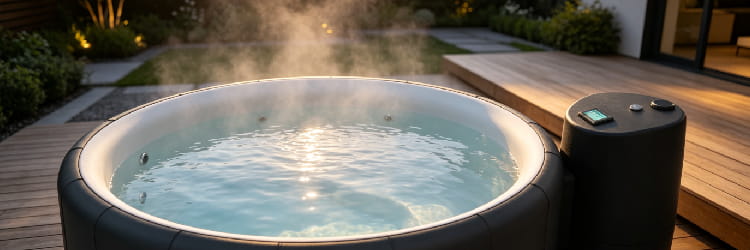
The ability to manage your spa environment with a simple touch is the culmination of a deeply user-focused design philosophy, sophisticated real-time communication technologies, and robust physical engineering. From the effortless "plug-and-play" setup to the invisible standards that make an interface feel intuitive, every element is crafted to remove friction and enhance your state of relaxation.
The technology that enables instantaneous temperature adjustments and the resilient, waterproof design of the controls are not just features—they are foundational components of a seamless wellness experience. As home automation standards like Matter continue to evolve, we can expect even greater integration and simplicity, where managing your personal oasis becomes as natural as breathing. The ultimate goal of smart soft spa control is to make the technology disappear, leaving you with nothing but pure, uninterrupted comfort, all available at your fingertips.